
By Zahra Rezaei Abyaneh and Matthew Hou • December 2025
McMaster Green Infrastructure Design Project began with this simple question, exploring how design can turn something often seen as waste into a visible, educational, and beautiful part of daily life.
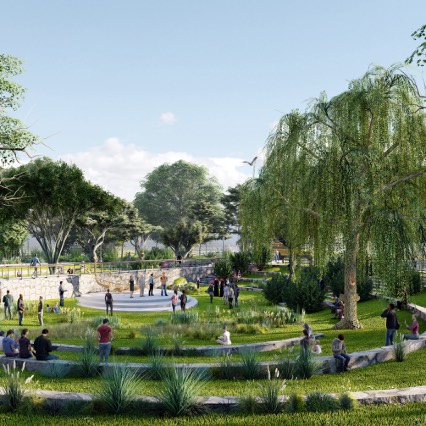
Our guiding idea was clear and simple: “What falls in McMaster, stays in McMaster.” Instead of allowing stormwater to flow unseen into underground pipes, we imagined how it could flow through experiences, shaping how people move, gather, and connect with nature.
The project started with a deep dive into GIS mapping and stormwater flow data. As we explored the site, it became clear that data alone could not tell the whole story.
Some maps were incomplete or outdated, so we turned to fieldwork. We walked the campus after rainfall, traced the paths where water naturally travelled, and spoke with facilities staff who understood the land through years of experience. This process reminded us that design is not only about analysis. It is also about observation, empathy, and learning from the place itself.
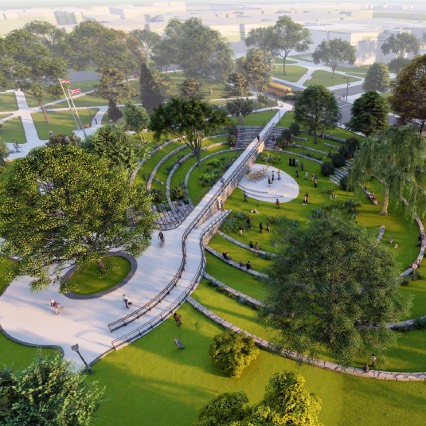
Our design process followed a double-diamond model: define, explore, create, and deliver. The outcomes became four pilot projects, each transforming a practical challenge into an opportunity for learning and renewal:
Each site manages runoff in a natural way while creating spaces where students and
visitors can experience water, landscape, and sustainability.
As designers with backgrounds in architecture, my teammate Matthew and I wanted each pilot project to feel alive. We hoped that when it rained, the campus would tell its own story.
We did not want to hide the water
We wanted to celebrate it.
The ground absorbs the rain. Trees offer shade. Water gathers and reflects the light. In the Rain Hollow, a small plaza fills and becomes a pond during rain, turning into a living classroom where people can see storm water management in action.
We also created a prototype, a modular, cyclone-based pretreatment device for hard surfaces such as parking lots. This small yet powerful structure filters runoff before it enters the system, shows that sustainable design can be both technical and poetic.
This project changed the way we understand design. I learned that when the data ends, design thinking begins. When resources are limited, creativity grows.
Working with our faculty lead and community partners showed how collaboration among architecture, engineering, and environmental design can lead to more thoughtful and holistic results.
Ultimately, this project reminded us that sustainability is not only about systems. It is about stories. By making water visible, we made sustainability something people can feel and understand. And by designing with rain, rather than against it, we found new ways to connect people, place, and purpose.


About Zahra Rezaei Abyaneh and Matthew Hou
Architects | M.Eng. Design Candidates, McMaster University
Zahra and Matthew share a passion for connecting architecture, sustainability, and human experience. Through the McMaster Green Infrastructure Project, they explore how stormwater can be more than a technical challenge. In their work, rain becomes a design language that inspires learning, strengthens community, and nurtures ecological resilience.