
By Michelle Pilon • July 2026
Lighting is often the last thing resolved in an interior space. Most likely selected after the furniture is placed and the finishes are finalized. It lives overhead, tucked into ceilings or discreetly concealed, doing its job without asking for attention. But increasingly, lighting is no longer content to fade into the background. In contemporary interiors, it is stepping forward, occupying space, shaping rooms, and behaving much like furniture. This shift is subtle, but it changes everything.
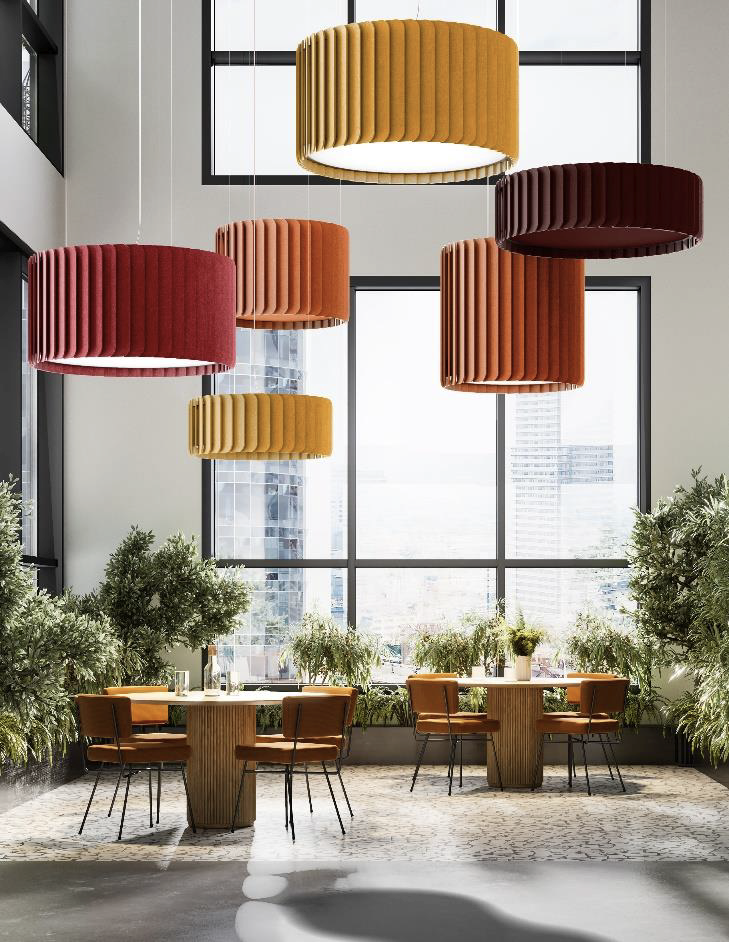
When lighting is treated as furniture, it becomes something that is placed rather than applied. Floor lamps no longer simply brighten corners; they define seating areas and claim territory within a room. Pendant lights drop into space with the visual weight of a table or sculptural object, organizing how people gather beneath them. Linear fixtures, suspended, freestanding, or integrated, establish edges and rhythm, influencing how a space is read and navigated. These elements sit at eye level, affect circulation, and contribute to the room’s composition in the same way furniture does.
Integrated lighting makes this relationship even more apparent. When light is built directly into shelving, benches, headboards, or custom millwork, it becomes inseparable from the object itself. The furniture does not simply receive light – it emits it. In these moments, lighting is no longer a flexible layer that can be swapped out later; it becomes part of the interior’s permanent logic. Designers must consider scale, proportion, and detailing with the same intention they would apply to any architectural element.
Materiality plays a key role in reinforcing lighting’s physical presence. Contemporary lighting fixtures increasingly use materials associated with furniture, such as stone, metal, fabric, wood, and textured glass. Even when switched off, these pieces remain visually active. Their mass, surface, and finish contribute to the atmosphere, reminding us that lighting is not only about illumination, but also about form and material expression.
Thinking of lighting as furniture also changes how interiors are composed. Rather than filling a room with multiple decorative objects, a single lighting element can act as a focal point or counterbalance within a layout. A sculptural lamp can anchor a seating arrangement. A suspended fixture can establish hierarchy
without walls or partitions. In some cases, lighting can even reduce visual clutter by taking on both functional and expressive roles at once.
This approach requires lighting to be considered much earlier in the design process. Instead of being layered in at the end, it must be designed alongside furniture placement, circulation paths, and architectural elements. When lighting is treated as a spatial object from the outset, it becomes a powerful design tool – one that shapes mood, movement, and experience as much as it supports visibility.
As Interior Designers continue to prioritize atmosphere, flexibility, and emotional resonance, lighting’s role will only expand. Seeing lighting as furniture invites designers to work with it more deliberately and not as something meant to disappear, but as something that truly belongs in the space.

About Michelle Pilon
Michelle Pilon is a Métis interior design professional based in Ottawa, Ontario, with nine years of experience working in commercial design. Her work is rooted in creating thoughtful, functional environments, with a particular passion for lighting design and its role in shaping spatial experience. Michelle is especially interested in how light, materiality, and interior architecture come together to influence atmosphere, comfort, and use within contemporary spaces.