
By André Rodrigues • May 2026
Design quietly shapes everything—how we connect, communicate, and navigate the world around us. Yet despite design’s expanding influence, designers themselves often work in isolation. We specialize, we focus, we master our craft. And somewhere along the way, silos emerge. Graphic designers talk to graphic designers. UX designers cluster with their own. Industrial, fashion, motion, and AI designers each develop their own languages, their own
communities. Specialization brings depth, no question. But when it replaces dialogue, something vital slips away.
Here’s the thing: progress has never been a solo act. Every meaningful leap forward—cultural, technological, social—emerges when people collaborate, when they challenge each other’s assumptions and weave different perspectives together. Collaboration lets us see beyond our blind spots. It introduces friction that sharpens ideas rather than dulling them. Most importantly, it creates solutions that are more resilient, more inclusive, and more grounded in reality.
Today’s challenges don’t respect boundaries. Climate responsibility, accessibility, ethical technology, social equity—these aren’t problems you can hand to a single discipline and expect answers. They demand collective intelligence. Isolation simplifies problems artificially.
Collaboration reveals their true, messy complexity.
This is where designers have a unique role to play. We sit at the intersection of intention and impact, translating complexity into clarity, ideas into form, systems into human experience.
We’re natural connectors—between technology and people, strategy and emotion, function and meaning. When designers collaborate across disciplines, the work transforms. Visual designers gain systemic thinking. UX designers become attuned to cultural nuance and emotional resonance. Product designers discover the power of narrative and symbolism. Each perspective strengthens the whole, and collaborative designers don’t just create better work—they create better consequences.
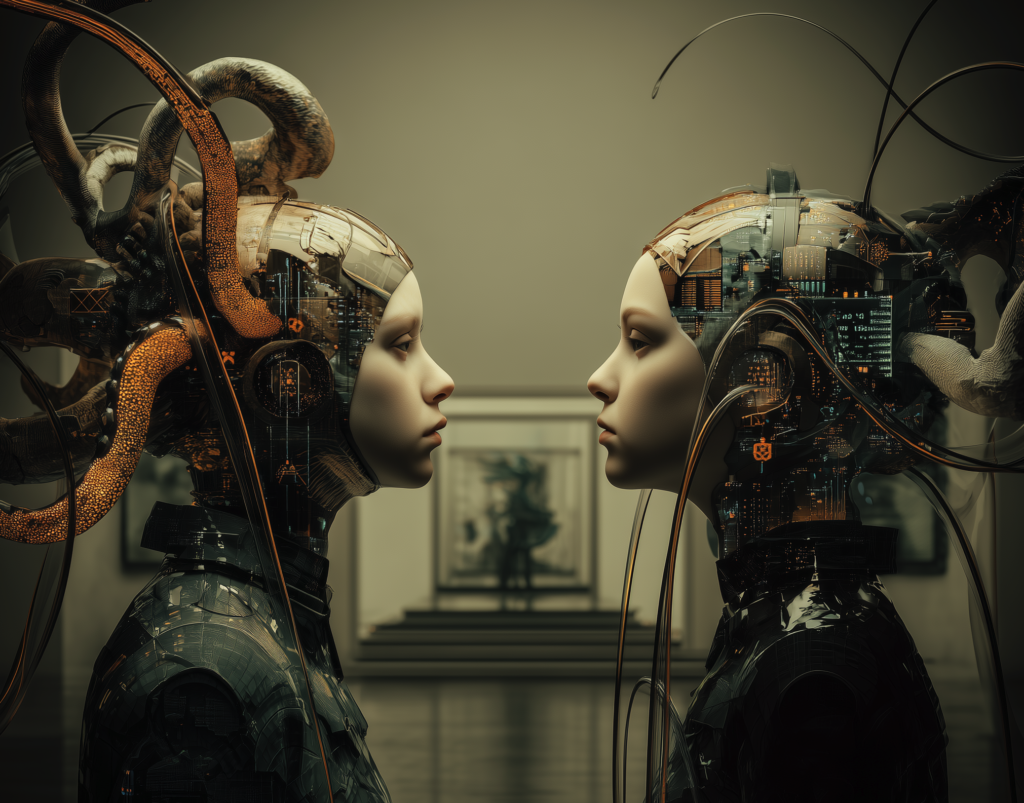
Many design challenges simply can’t be solved from one angle. A usability issue is often emotional. A branding choice carries ethical weight. An AI-generated image reflects cultural values, data selection, and intent. When designers stay inside their silos, they risk solving only fragments of the problem. When they engage with others, design becomes more holistic, more responsible, more genuinely human-centred.
In my own journey through multimedia design, UX/UI, and AI-assisted creation, I’ve learned that the most meaningful growth happens at the edges—where disciplines overlap, and assumptions get questioned. And as AI embeds itself deeper into creative workflows, this collaborative instinct becomes even more critical. AI accelerates production, sure, but it doesn’t remove responsibility. Design decisions now scale faster and reach wider audiences than ever. This raises questions no single designer can answer alone: not just what can be created, but why, for whom, and with what consequences.
Breaking silos doesn’t require revolution. It starts with curiosity—listening beyond your discipline, valuing different design languages, embracing collaboration as creative strength rather than compromise. Design has always been a social act. By working together more openly, designers can help shape a world that’s not only functional but thoughtful, inclusive, and truly humane.

About André Rodrigues
André Rodrigues is a multidisciplinary designer working across UX/UI, digital experiences, and AI-assisted visual creation. He is the founder of the AI Art Portugal community.