
NEWSLETTER ARCHIVE...
want to be featured in our newsletter?
subscribe to our membership!
FEATURED DESIGN ARTICLES
[01] Alluring Design By Thomas Ask

“Sounds like the crushing of a Styrofoam cup,” was my fleeting thoughtuntil I finally fell into the muddy water. I had just crashed through an oldpier as I was getting off a boat on the coast of Sumatra, Indonesia. I was abit too heavy for the old, rotting wood. This was one of the hazards ofexploring boats and walking on sketchy piers and scaffolding.
[02] Designing for Utility, Not Hype: Building Hardware That Outlives Trends by Milos Milivojevic

Scroll through any design feed today, and you’ll see an endless stream of beautiful renders, bold concepts, and “disruptive” ideas. The visuals are sharp. The messaging is ambitious. The excitement is immediate. But ask yourself a simple question: How many of those products will still be in use five years from now?
[03] Observation Is Intentional: What Nature Taught Me About Design by Aashna Kuntala

Before discovering that design was a field, I spent most of my time sketching, painting, and entering school art competitions. Over time, I realized my interest was less in the idea of “winning” and more drawn to how forms were created and how they worked together.
[04] The Hidden System Behind Strong Brand Identity by Nikita Pyatkin

When people think about brand identity, they usually think about the logo first. Sometimes typography or color comes next. These elements are important, but they are not what make a brand truly scalable. What defines a strong brand is not just its core elements, but the supporting system around them.
[05] Craft Was Never About the Hand by Juan Sebastián Cueva

Where does craft live when machines execute the work? Automation promises efficiency, repeatability, and control. Across disciplines, from product design to architecture, from digital interfaces to fabrication labs, tools are increasingly capable of executing what we describe with remarkable accuracy. Yet the more automated our workflows become, the more visible something unexpected appears: the limits of abstraction.
[06] Creating through excess: why I chose maximalism by Marie Lauriane Khoury

In a field that constantly encourages reduction, I found myself moving toward accumulation, not to complicate things, but to stay honest to how I think and create.
FEATURED DESIGN ARTICLES
[01] Bridging cultural identity through Textile Design by Issabelle To-Eagle Speaker

I didn’t grow up dreaming of becoming a Designer. I fell into fashion because I had no idea what to do post-high school. I tried a summer program at Emily Carr, loved being creative, and then I moved into the two-year program at VCC. I completed VCC in the fall of 2019, then the pandemic hit and everything went quiet; I felt like everyone was questioning their own paths, including me.
[02] Design is a Language by Karim W. F. Youssef

In a parallel vein, if Design is a materialization of an intention, Design becomes the languaging of Pratibha, the transmission of Pratibha. To draw parallels between Design and Pratibha, Gemini listed four layers of design as a language from a philosophical perspective: the ontological, the semiotic, the phenomenological, and the praxeological…
[03] What Some of Us Get Wrong About Toy Design by George Lysy

I recently came across an article written as a dialogue between a cost analyst and a manufacturing specialist about a toy car. Should they bother to mould in a detailed undercarriage? The analyst said no, it costs an extra two cents for every thousand or so cars, and that adds up over time, especially since, of course, nobody actually playing with the toy would care. But the specialist said, enthusiasts would care, collectors would care…
[04] From a Beautiful Brand to a Responsible One: Redesigning My Fashion Journey by Mona Rasoolizade

My brand started with a ready-to-wear collection and gradually expanded into bespoke designs for private clients, eveningwear collections, and collaborations with other brands, producing their collections in my own atelier. On the surface, everything was working. The brand grew quickly, became visible, and built a strong community. Iranian female singers and bloggers were reaching out for custom designs.
[05] Designing in Constraint-Heavy Environments: What UX in Enterprise Really Teaches You by Amirreza Nezami

Many designers enter enterprise environments expecting scale to mean freedom. Bigger teams, more resources, larger impact. On paper, it sounds like the ideal playground for thoughtful design.
[06] Designing Beyond Objects: Industrial Design’s Shift in the AI Era by Incia Khalid

The way industrial designers work is changing, not because AI is taking their jobs, but because the most valuable parts of the job are shifting. AI tools can now generate design options and visualizations at extraordinary speed, which means that the time designers are actually spending on producing individual concepts is shrinking. Instead, the real skill is knowing which direction to take.
FEATURED DESIGN ARTICLES
[01] Empathy Mapping Isn’t the Output - It’s the Starting Point by Rebecca Kim
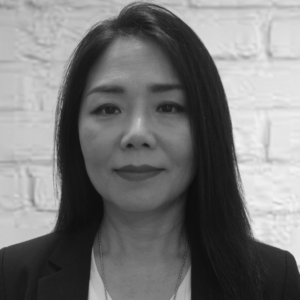
Empathy mapping is one of those UX tools almost every designer has used — and quietly questioned. We’ve all been there: a workshop gets scheduled, sticky notes go up, quadrants get filled, and for a moment, everyone feels aligned. (Article 1 of a 3-Part Series)
[02] Reframing Discovery: The Impact of Language in Design by Celine Hong

Not as popular as UX, you might not immediately recognize the term Service Design. Even for those who have never heard of it, the Service Design process will sound familiar. Every organization puts its own spin on it, but it typically goes something like: Alignment, then Discovery, Opportunity Identification, Prototyping & Testing.
[03] Designing for Calm: What Happens When You Remove Failure by Nicholas Jacob

Most modern digital experiences are designed around pressure. Deadlines. Notifications. Streaks. Scores. Warnings. Red badges.Loss states. Even when the intent is positive, many systems rely on urgency and consequence to drive engagement. The underlying assumption is simple: without pressure, people will disengage.
[04] When Consistency Becomes the Goal, What Gets Lost? by Seoha Kim
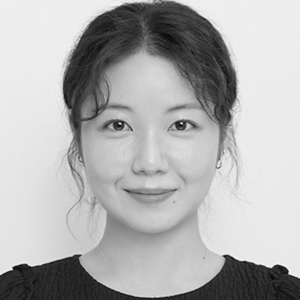
I started this research with a simple curiosity. When people need directions or clarity to reach a destination, they use navigation tools as needed. There’s no pressure to open them daily. No guilt if you don’t. No reminder asking why you skipped yesterday. You open the tool when you need information, get what you need, and move on.
[05] Good Design Brings Attention, Quality Builds Trust by Mohammad Mohebbi

Today, most brands understand that good design is important. Having a graphic designer is no longer optional. It is a necessary part of doing business. Brands that ignore design often fall behind their competitors. Design has become a natural part of modern business. However, there is one important point I would like to focus on. With good design, we usually have one chance to attract an audience.
[06] Design Beyond Silos: Why Collaboration Shapes a Better World by André Rodrigues

Design quietly shapes everything—how we connect, communicate, and navigate the world around us. Despite design’s expanding influence, designers themselves often work in isolation. We specialize, we focus, we master our craft. Somewhere along the way, silos emerge.
FEATURED DESIGN ARTICLES
[01] The Invisible Power of Design by Warda Ben Abda

We often judge design by what we see: forms, materials, and colours. Yet the most influential decisions are the ones we rarely notice. A space can calm us, energize us, or make us hesitant without a single conscious thought. That silent influence is where design becomes powerful: in the choices that guide behaviour, mood, and flow long before aesthetics come into play.
[02] Designing with Emotion: A Holistic Approach to User Experience by Jonathan Line

As an industrial designer, I’ve learned that design is not only about solving problems, but about creating meaning. We’re trained to think critically about usability, efficiency, and form, but true design goes deeper than that.
[03] Who’s Her Closet? Reading Identity Through Design by Kelly Ndanga

How much identity can it hold without ever saying a word? “Whos Her Closet?” is a newly launched online thrifting company that was never meant to be immediately understood. The name leaves something unresolved because clarity isn’t always the point.
[04] The Muscle Memory Tax: When Major UX Changes Shatter Habit and Serve the Algorithm by Monica Rampaul

I just wanted to take a picture. The moment required speed – a spontaneous portrait of my friend in perfect light. I opened my phone’s camera app and reflexively tapped to switch to Portrait Mode, but the control had vanished, replaced by an unfamiliar swipe and a hidden menu.
[05] I Think as a Graphic Designer by Abir Anowar

When I started my journey as a graphic designer, I believed good design was mostly about balance, typography, and visual harmony. A strong poster, a clean logo, or a well-structured layout felt like the ultimate goal.
FEATURED DESIGN ARTICLES
[01] Trends vs. Timelessness: How to Read What Will Last by Fernanda Santos

I hear the word trend used constantly in design, and often in a way that makes it feel disposable. Something new, fast, something that will be replaced in six months. But in my experience, trends aren’t shallow. They’re misunderstood. A trend is rarely just about how something looks. It’s about why it looks that way in the first place.
[02] Talent, Insight and Specificity by Marcel Witbooi
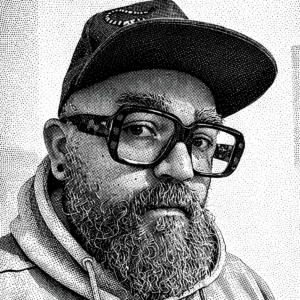
The three elements that Make Great Work Exceptional
I used to think that talent was a God-given gift, and sometimes it is, but talent is something that can be taught and nurtured. It requires a willingness to learn, a willingness to work and determination. So does that mean anyone can be a Creative? Of course they can.
[03] Designing with Uncertainty: Finding Creativity in Not Knowing by Anastasija Vidovic
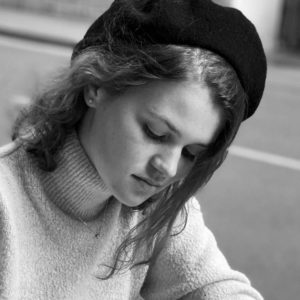
At an early design stage, everything arrives at once, but nothing yet knows its role. The space feels blank, yet it is already filled with inputs. Uncertainty in decision-making arises not because designers lack information, but because they face too much of it. The design landscape has shifted — architects can no longer rely on expertise and intuition alone.
[04] The First Invoice You’re Afraid to Send by Rashad Bou Dargham

A designer-to-designer reflection on worth, fear, and the project that changed me. Every designer remembers the first invoice that made their hands hesitate over the “send” button. Not because the work wasn’t good enough, but because pricing forces us to confront something far more uncomfortable which is our own sense of worth.
[05] The “right problem” problem by Roxi Nicolussi

I have a love-hate relationship with the internet. Love: The internet helped me come into my queer identity and find community. Hate: it is a place of death threats and live-streaming hate crimes. That tension between the intention of what we build and the real effects it has — is at the heart of what I call the “right problem” problem…
FEATURED DESIGN ARTICLES
[01] Design Is Not A Noun by Alina Halai
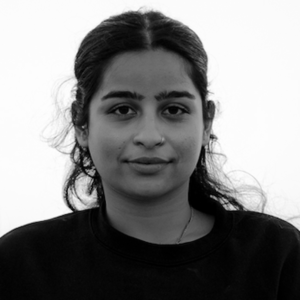
In a world inundated with things you can consume, mindlessly, without ever noticing — be the differentiator, be a designer, an active participant in the life you’re in, an empathetic collaborator.
[02] Let's Not Forget About the Joy by Barbara Croatto

Spend five minutes in any designer community right now, and you’ll see the same thing: fatigue, frustration, people wondering what the hell happened to this industry. The landscape feels crowded and noisy. Work is unpredictable. Competition is global. The pace is brutal.
[03] Freelance Design: The Career Where You’re Your Own Boss by Julia Matar

And Also Your Own Employee of the Month (Against Your Will)
When I graduated with my Bachelor of Industrial Design, I truly believed that freelancing would give me freedom. I pictured myself working from cafés, choosing my own clients, and building a multidisciplinary career like a calm, empowered creative goddess.
[04] Digital Detox: Getting Back to Hands-On Design by Anthony Salahor

Industrial designers are living through one of the most radical changes in the history of the field. This transformation revolves around the rapid rise of AI-driven design tools. While these technologies offer immense technical advantages, they also threaten to reshape the way we work, and not always for the better.
Take the SURVEY on designers and design offices and help us grow our community.
We invite you to take a short survey to share your thoughts on a designer’s work and their firm.
Your feedback will help us better understand the effectiveness, creativity, and overall impact of their design approach. The survey is quick, and your insights are greatly appreciated.